Hiking the Gerês
Ninety minutes northeast, Portugal’s only national park runs granite mountains, waterfall lagoons, villages of stone granaries on stilts — and a Roman road still counting its miles. The car plans the day; the rules protect it.
The short version
- Peneda-Gerês is Portugal’s only national park — a 1971 designation covering granite ranges along the Spanish border — reached from Porto in about ninety minutes by car, with organized day tours as the car-free answer and public transit plainly thin per the alarm; park information at icnf.pt.
- The pick-one-zone rule per the alarm is the park’s geography lesson: the Gerês valley (spa town, waterfalls, lagoons, and the reservoir arms) and the Soajo–Lindoso plateau (villages, espigueiros, terraces) sit on opposite flanks, and a day serves one properly or both poorly.
- The espigueiros are the singular sight: clusters of granite granaries raised on staddle-stones — Soajo’s two dozen on their bare rock threshing floor, Lindoso’s larger field beneath the castle — working corn stores for centuries, crowned with crosses, and photographing like a granite fleet at anchor.
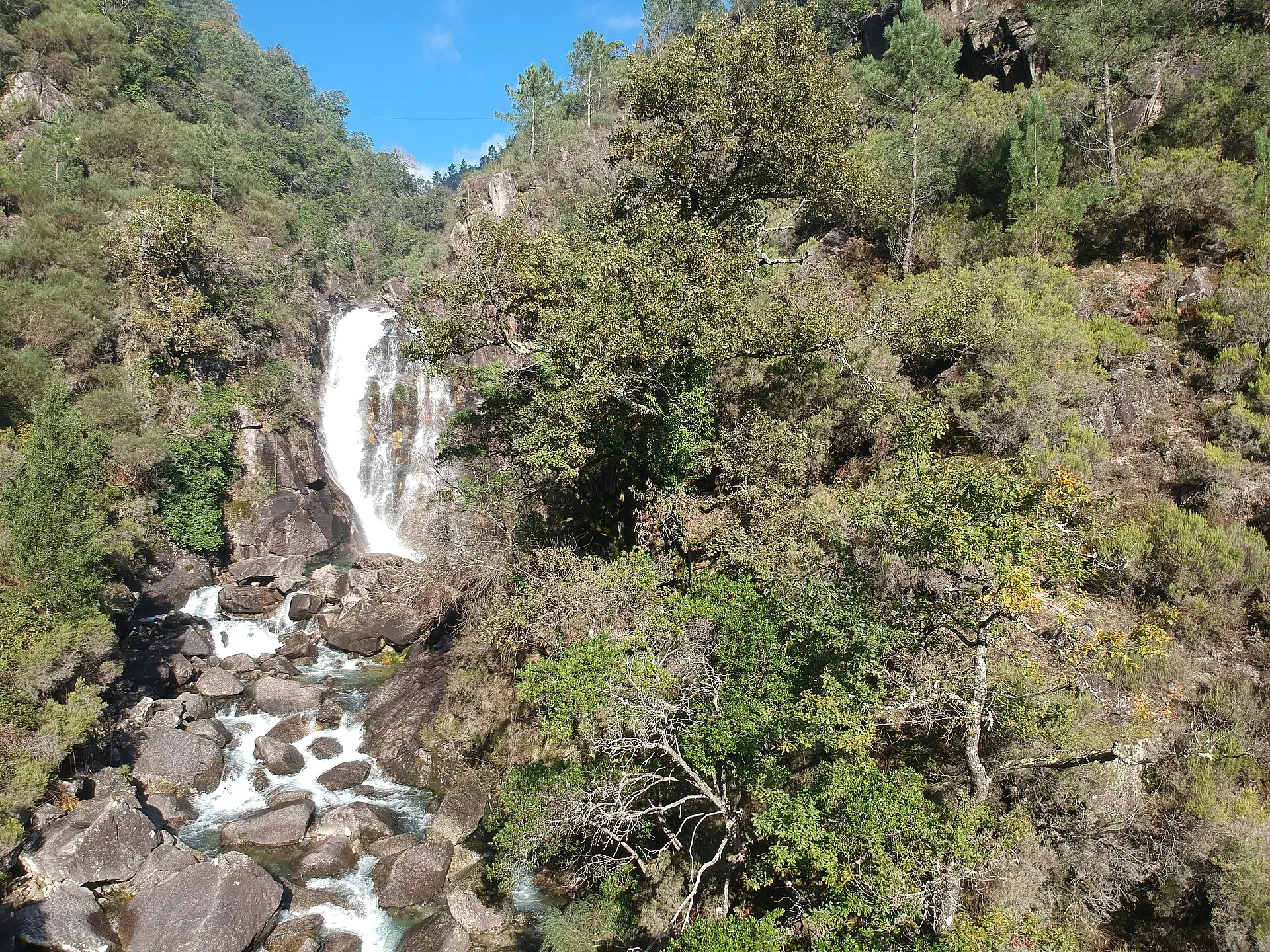
- The waterfall-and-lagoon tier runs the park’s summer fame: Arado’s falls and pools, the Tahiti cascades’ jade steps, and swimming holes whose late-morning crowds per the alarm reward the early start — with footwear for wet granite and the pack-out rule in force.
- The Roman geira — the military road from Braga toward Astorga — threads the park with the Iberian Peninsula’s densest run of surviving milestones, walkable in marked stretches where the miliarios stand in ditch-side clusters.
- The living park rounds it: garrano wild ponies grazing the high commons (present long before the park, per the alarm’s closing line), long-horned barrosã cattle in the villages, the Gerês spa town’s 19th-century bathhouse bones, and fire-season rules that close trails and forbid flames with zero humor.

Getting there
The drive runs Braga-past motorway then mountain roads that halve your average speed and double the views — fuel up before the park, since stations thin inside it. Tours from Porto bundle the transport, a zone’s highlights, and usually a lagoon stop; self-drivers gain the early start the alarm’s crowd rule pays for. The zone decision shapes the route entirely: Gerês valley via Terras de Bouro, or the Soajo–Lindoso flank via Arcos de Valdevez — committing at the map stage, not the junction.
The day
A Gerês-valley day opens at the falls while the light angles in and the pools are empty: Arado’s cascade from its stone bridge, the Tahiti steps taken carefully on wet granite, and the swim that justifies the whole drive. The reservoir’s arms and the Pedra Bela viewpoint fill the midday; the spa town serves the long lunch its 19th-century bones were built for. A Soajo–Lindoso day trades water for stone: the espigueiros’ threshing-floor fleet in morning light, Lindoso’s castle-and-granaries pairing, terrace-village lanes, and the geira’s milestone clusters for the Roman hour. Both versions share the exit ritual — the viewpoint pull-offs on the descent, the barrosã herds in the road treated as the right of way they are, and Porto reappearing in ninety minutes of unwinding curves.
When to go
May–June and September–October run the park at its best — full waterfalls or golden terraces, walking temperatures, thin crowds. July–August delivers warm lagoon swimming at the cost of the alarm’s late-morning crowds and the year’s strictest fire rules (hot, dry spells close trails and ban every flame — checked before the drive, honored absolutely). Winter turns the park moody and half-empty, waterfalls at full roar between fronts, with mountain-road judgment as the entry fee. The espigueiros photograph in every season; the corn harvest (autumn) shows them working.
Frequently Asked Questions
Why do the granaries look like tombs?
The espigueiros’ narrow granite bodies, raised on mushroom-capped stilts against rodents and damp, crowned with crosses — the resemblance to a cemetery is universal and the function is pure agriculture: ventilated corn storage, communal threshing floors beneath. Soajo’s and Lindoso’s clusters are protected monuments still partly in use, which is the best fact about them.
Can I swim at the waterfalls?
At the established lagoons and pools, yes — unsupervised, cold, and on your own judgment, with wet-granite footing as the real hazard and the early start per the alarm as the crowd solution. Drought summers lower the falls to trickles; spring runs them at full volume with water to match the season’s temperature.
What’s the Roman road story?
The geira (Via Nova) linked Braga to Astorga in the 1st century, and the park’s stretch preserves milestone clusters at a density unmatched in Iberia — inscribed miliarios standing where eighteen centuries left them. Marked walking sections near the Homem river make the archaeology an easy hour inside the nature day.
Are the ponies approachable?
The garranos are wild and stay that way — photographed at distance, never fed, never crowded. They’re an ancient Iberian breed that predates the park by millennia per the alarm’s closing line, and the park’s rules on wildlife distance apply to them as fully as to anything with teeth.
Gerês or the Douro from Porto?
The Douro (documented on this network with its train-line mechanics) for terraced river grandeur and wine; Gerês for granite wilderness and swimming holes. Cultivated versus wild — and the honest Porto week does both, since they answer entirely different appetites at similar distances.