Aveiro by Train
An hour south by the cheapest train in this network, a lagoon town runs painted boats down its canals and keeps its beach quarter dressed in candy stripes. Small, sweet, and exactly a day.
The short version
- Urban (urbano) trains run Campanhã and São Bento to Aveiro roughly half-hourly for pocket change — no reservations, just validate and board; times at cp.pt.
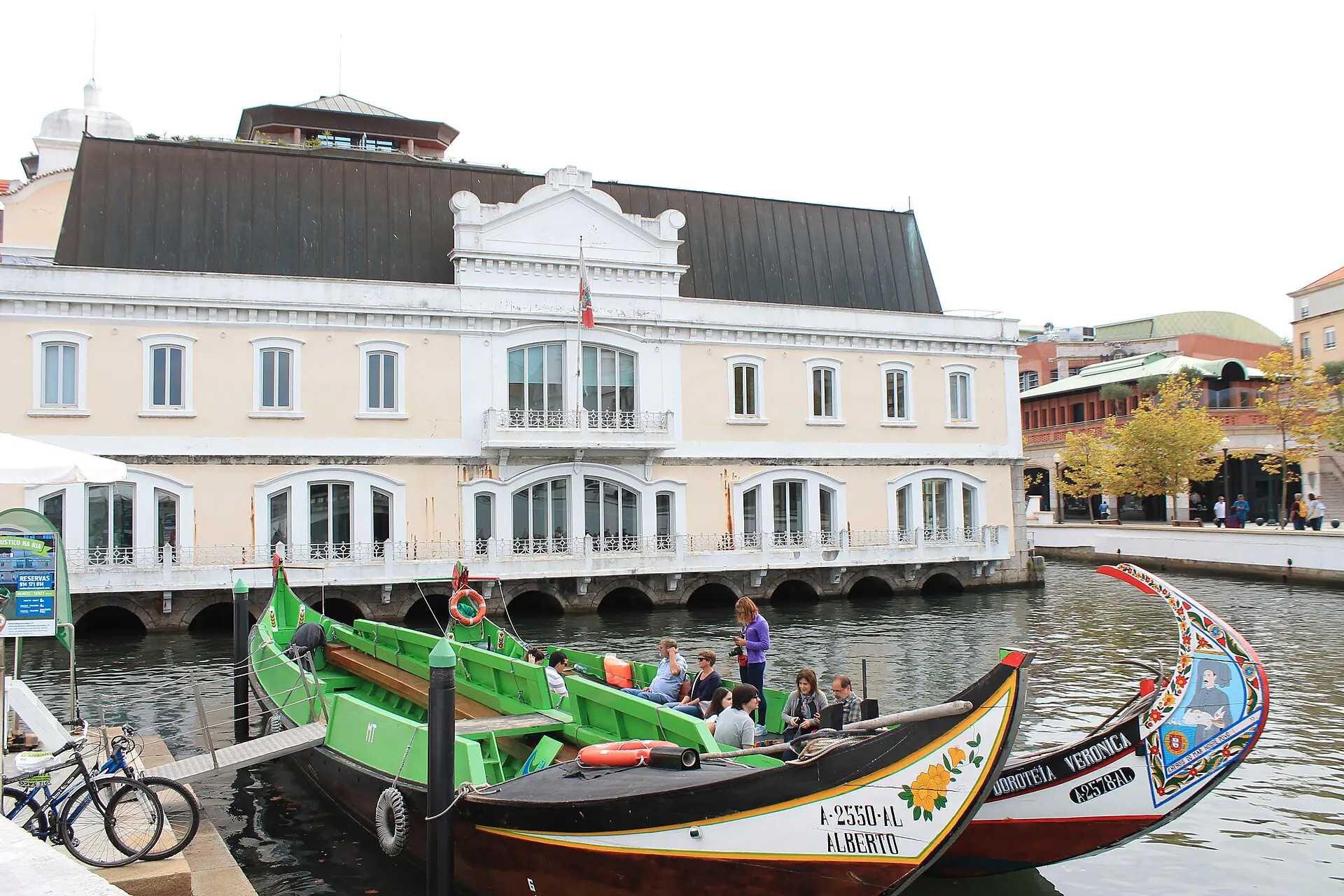
- The moliceiros — the high-prowed, cheerfully painted boats that once harvested lagoon seaweed — now run 45-minute canal circuits from the central bridges for around €13–15; the painted panels’ traditional humor runs from folk scenes to gently unprintable.
- Ovos moles — soft egg-yolk sweets in wafer shells shaped like fish and lagoon motifs — are the town’s protected specialty; the historic pastelarias sell the real article per the alarm’s kiosk warning.
- The Art Nouveau district lines the main canal with tiled and curling facades — a compact museum-on-a-street, with the actual Art Nouveau museum in the best of them.
- Costa Nova, fifteen minutes by local bus or taxi across the lagoon, ranks its beach houses in vertical candy stripes — red, blue, green against white — a photograph that has done more for Aveiro than any brochure.
- The salt pans at the town’s edge and the fish market’s morning theater fill the margins; the beach beyond Costa Nova’s boardwalk is a real Atlantic strand when the photo session ends.

Getting there
The urbano from São Bento or Campanhã is the network’s cheapest hour — a commuter train doing tourist work, no booking possible or needed. At Aveiro, the station itself opens the show: its azulejo panels of lagoon life justify arriving five minutes early for the return. The canal core sits a ten-minute walk ahead. For Costa Nova, the local bus from the canal-side stops runs a lagoon-rim loop in about twenty minutes; taxis and rideshares do it faster for a few euros more.
The day
Canals first: cross the central bridges, pick a moliceiro with a departure imminent, and take the half-hour circuit — the boatmen’s commentary and the painted panels carry it, and once is genuinely enough, per the alarm. Ovos moles follow from a proper house (the town’s oldest pastelarias cluster near the main canal), eaten immediately with a coffee as tradition intends. The Art Nouveau facades and the fish quarter fill an unhurried hour. Then the Costa Nova leg for the afternoon: the striped houses’ boardwalk, the photo everyone owes their feed, and — the underrated half — the ocean beach behind, wide and Atlantic-serious. A seafood lunch on the Costa Nova strip (the fish came from the boats across the road) beats eating back in town. The return train needs no planning; that’s the urbano’s whole charm.
When to go
April through October is the season — canal light, open boats, beach hours. July–August adds Portuguese holiday crowds and the best swimming; June’s São Gonçalinho and midsummer festivals decorate the calendar. Winter stays open but blows lagoon-damp; the moliceiros run reduced circuits and the stripes photograph moodily under grey, which has its partisans. Weekday mornings own the canals in every season.
Frequently Asked Questions
Is the moliceiro ride touristy?
Completely, and correctly priced for what it is: the town from its water level with commentary, once. The boats’ working days ended with the seaweed trade; this is their honorable retirement. Skip it only if boats bore you on principle.
What exactly are ovos moles?
Egg-yolk-and-sugar cream sealed in rice-paper wafers, shaped as shells and fish — a convent recipe with protected status and a texture between custard and communion. They travel well, which makes them the correct Porto-return gift.
Costa Nova or Barra?
Costa Nova for the striped houses and the boardwalk scene; neighboring Barra for Portugal’s tallest lighthouse and a bigger beach. The bus serves both; the photograph lives at Costa Nova.
Why are the houses striped?
Fishermen’s storehouses painted in high-visibility stripes against Atlantic fog, the story goes — practicality that aged into identity. The current owners maintain the scheme with the discipline of people who know what their real estate is famous for.
Aveiro or Braga/Guimarães as the Porto day trip?
Aveiro for canals, sweets, and beach ease; Guimarães (documented on this network) for the birth-of-Portugal history card. Aveiro is the lighter, brighter day — families and photographers lean here, history readers north.