Braga and Bom Jesus
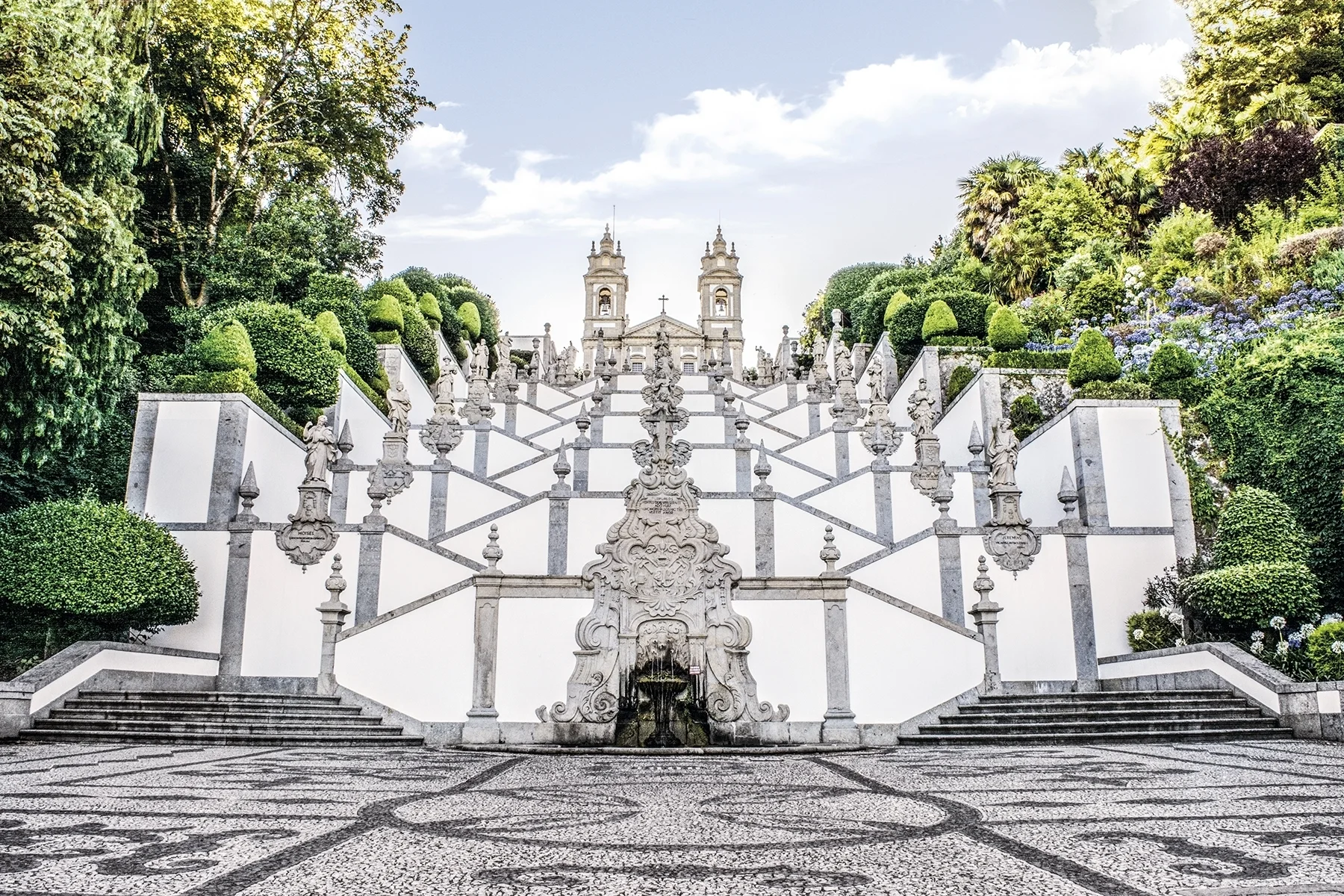
An hour north, Portugal’s religious capital keeps its masterpiece on a hill outside town: a baroque stairway of 577 steps and the world’s oldest water-balance funicular, running since 1882. Ride up, walk down, get both.
The short version
- Urban and regional trains run Porto to Braga in about an hour at small fares and high frequency — validate and board at cp.pt; city bus 2 runs from Braga’s center to the Bom Jesus foot.
- Bom Jesus do Monte’s funicular has climbed on water ballast since 1882 — the world’s oldest of its kind still working: the upper car’s tank fills, gravity does the rest, and the few-euro ride is transport history in 3 minutes; sanctuary details at bomjesus.pt.
- The stairway is the monument: 577 steps of white-and-granite baroque zigzag — the Five Senses and Three Virtues fountains staging the ascent as allegory — built for pilgrims who still climb it, some on their knees; the alarm’s ride-up-walk-down order collects the funicular and the full staircase view both.
- The hilltop church, the terrace’s view over the Minho, and the wooded park behind (lake, grottoes, century-old hotels) make the sanctuary a half day on its own clock.
- Braga’s Sé — the country’s oldest cathedral, begun in the 11th century — anchors the city half: Manueline towers, gilt organs, and the treasury’s deep sacristy holdings, with the tomb chapels carrying the first dynasty’s parents.
- The center fills the margins generously: the Santa Barbara garden against the medieval palace wall, Rua do Souto’s arcades, the Arco da Porta Nova, and A Brasileira’s 1907 café tables for the coffee the day owes you.

Getting there
São Bento’s Braga regionals run the Minho line all morning at urbano prices — no bookings, no planning beyond the alarm’s approach decision. At Braga, bus 2 or a short taxi reaches the funicular’s lower station; the sanctuary makes the better morning (light on the stairway’s east face, the day’s coolest climb hours) with the city’s cathedral-and-café half following. The return trains run into the evening at the same shrug-level frequency.
The day
Bom Jesus first, per the geometry: the water-funicular’s three-minute ascent — watch the tanks trade ballast at the passing loop — then the church, the terrace’s long view, and the park’s lake shade. The descent is the monument’s full text: 577 steps read downward, the Virtues then the Senses, each fountain landing its allegory, the zigzag composing and recomposing below you — the view the pilgrims earn in reverse, per the alarm’s both-directions trick. Bus back for the city half: the Sé’s accumulated centuries (the treasury tour for the committed), the garden-and-arcade circuit, and a pastelaria stop where the frigideiras and pudim argue Braga’s case. Lunch runs Minho-hearty — bacalhau à Braga by loyalty. Sameiro’s higher sanctuary extends the theme for completists with an hour spare; the evening train needs nothing but boarding.
When to go
April to June and September to October carry the stairway’s climbing weather and the park’s green. Holy Week is Braga’s global moment — Portugal’s most intense Easter processions, torchlit and drum-driven, worth aiming for deliberately with lodging booked or avoided knowingly. São João (late June) turns the city into the Minho’s biggest street party. Summer runs warm with the sanctuary’s woods as the refuge; winter is quiet, granite-grey, and atmospheric, with the funicular working its water trick in all of it.
Frequently Asked Questions
How does the water funicular actually work?
The upper car fills its tank until it outweighs the lower car plus passengers, gravity runs the descent-and-ascent on the cable, and the arriving car dumps its water to reset — no engine, 1882 engineering, still certified and still daily. The three minutes justify the trainspotting.
Can I climb up instead of down?
Freely — pilgrims do, and the allegory reads ‘correctly’ upward (senses conquered, virtues gained, church attained). The alarm’s ride-up-walk-down order simply buys the funicular experience plus the easier direction; devotion and knees can vote otherwise.
Braga or Guimarães from Porto?
Guimarães (documented on this network) for the birth-of-the-nation castle card; Braga for the sanctuary, the stairway, and the country’s oldest cathedral. The same rail corridor serves both — the ambitious pair them in one long day, the sensible give each its own.
Is the sanctuary free?
Grounds, stairway, and church, yes — the funicular charges its few euros and the church’s small museum its own. Bom Jesus runs as a working sanctuary first; visitor rules follow accordingly, dress and quiet included.
What’s Sameiro?
A second, higher Marian sanctuary two kilometers beyond Bom Jesus — vast esplanade, pilgrimage scale, and the region’s biggest devotional events. Architecture pilgrims rank Bom Jesus first; the view from Sameiro’s dome outranks both. A taxi hop serves the curious.